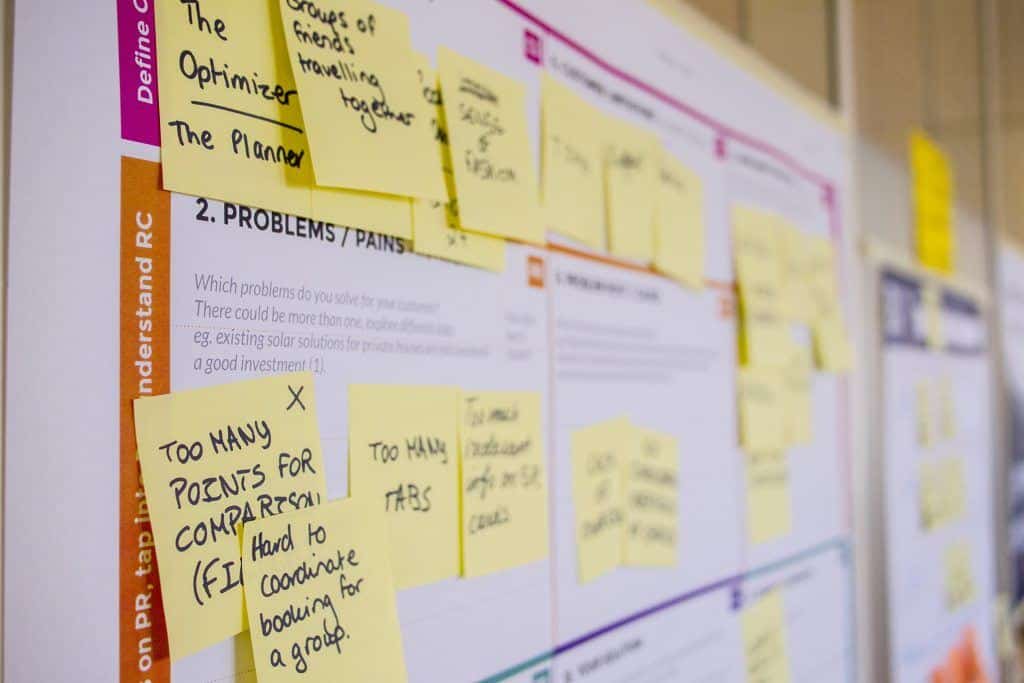
Interviews are structured conversations in which you question users, customers or stakeholders about their needs, behaviour, problems and experiences. The aim is to gather qualitative insights that help you make better decisions about products, services or websites. Unlike surveys or analytics, which tell you what is happening, interviews let you understand why something is happening. For SMEs, interviews are an efficient way to stay close to your customer without investing heavily in market research.
How do interviews work in practice?
A good interview starts with a clear objective: what do you want to know and why? You ask open-ended questions that invite the interviewee to tell rather than answer yes or no. Think of questions like "Can you walk me through your last purchase?" or "What was difficult when you used our website?". You listen actively, ask follow-up questions and take note of literal statements. A typical interview lasts 30 to 60 minutes. You usually conduct 5 to 8 interviews for a project, as you often recognise patterns after that number. The trick is not to lead: you want to hear what the other person really thinks, not what you hope to hear. Interviews can be done live, via video call or by phone. Live works best for complex topics because you see body language.
Why interviews came into being and why they still work today
Interviews as a research method come from the social sciences and have been part of design thinking and user experience research for decades. They arose in response to a problem: numbers don't tell you the whole story. You can see in Google Analytics that visitors drop out on your contact page, but not why. Interviews fill that gap. In recent years, they have become even more relevant because competition is increasingly about customer understanding. An online shop that understands why customers hesitate at the checkout can improve in a more targeted way than a competitor that only looks at conversion rates. For SMEs, this is an advantage: you don't need a big budget, just time and curiosity.
What interviews bring to your company
Interviews help you discover concrete improvements you might otherwise miss. A software company discovers that customers don't use a feature because they can't find the button, not because the feature itself is bad. A B2B service provider hears that prospects mainly want to know what a process costs before they contact them, and adjusts the website accordingly. By combining interviews with web design and SEO, you build a site that not only gets found but also really matches what your target audience is looking for. Interviews also provide stories and literal quotes that you can use in marketing. They force you to step outside your own bubble and listen to how customers really think and talk.