Logo Guidelines

Logo guidelines, Corporate identity handbook, Brand book, Logo handbook, Brand guidelines, Logo style guide, Brand guidelines
Logo guidelines are written instructions for the correct use of a logo in various situations. They ensure consistent brand appearance.

What are logo guidelines?

Logo guidelines are written instructions that define how to use a logo correctly in different situations and on different carriers. Among other things, they describe the minimum dimensions, permitted colour variations, free space around the logo and prohibited uses. For SMEs, they are the basis for consistent branding, both internally and with external partners such as printers, web designers or franchisees.

How do logo guidelines work in practice?

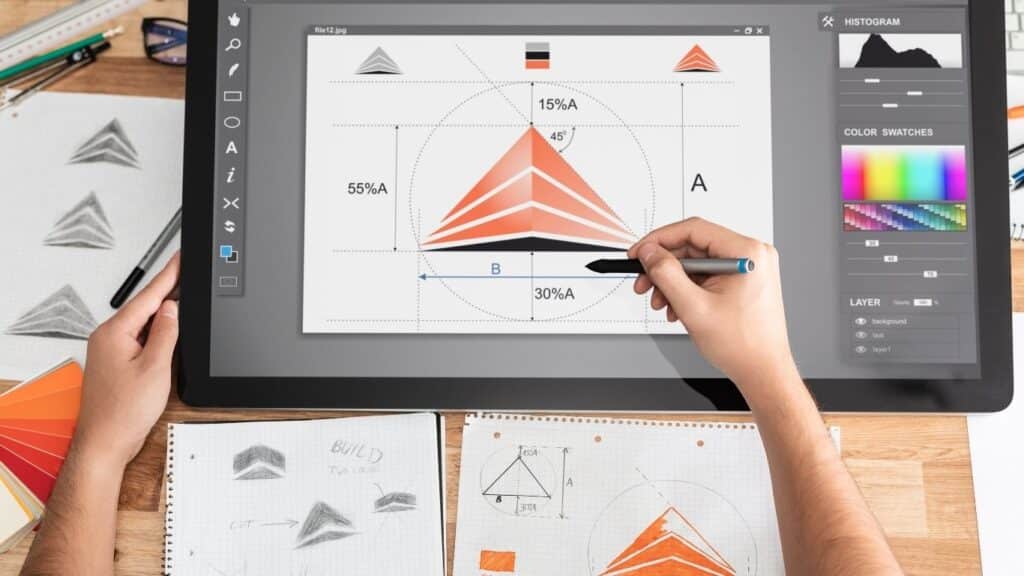
A logo guideline document contains visual examples and clear do's and don'ts. For example, you can see the logo on a white background, on a dark background, in black and white and in colour. It also describes the minimum amount of white space that should be left around the logo so that it does not drown between other elements. You will also get instructions on the smallest size at which the logo still remains recognisable. Many guidelines contain a separate section with prohibited variants: logos that are stretched, rotated, shaded or displayed in the wrong colours. This prevents employees or external parties from accidentally mutilating the logo. In larger organisations, logo guidelines become part of a broader corporate identity manual, but a one-man business with an online shop also benefits from a compact A4 sheet with the most important rules.

Why logo guidelines came into being and why they still count today

In the 1970s, major brands such as NASA and Shell began to systematically define how their logo should be used. The reason was simple: hundreds of suppliers and departments worked with the logo at the same time, and without guidelines, a proliferation of variants arose. In Dutch SME practice, you see the same dynamic on a smaller scale. As soon as you work with multiple parties (a printer for business cards, a web designer for your site, a stand builder for a trade fair), you run the risk that everyone interprets the logo slightly differently. Logo guidelines prevent that fragmentation. Since the rise of online brand portals and design tools such as Canva, guidelines have not become less important; on the contrary: precisely because everyone can now create visual material themselves, clear instructions are indispensable.

What logo guidelines deliver for SMEs

Logo guidelines save time and avoid miscommunication. An employee creating a PowerPoint does not have to guess which logo version to use. An external graphic designer immediately receives the right files and instructions, so you do not have endless revision rounds about the colour or placement. In addition, you strengthen your brand identity: customers and relations see the same image everywhere, which increases trust and recognisability. In our projects at Monkey Vision we notice that companies using logo guidelines on average grow faster towards a professional brand identity, because the basis is already there. You then only need to add typography, colour palette and visual style. For franchise formulas or companies with multiple branches, logo guidelines are even indispensable: they have to guarantee that every branch looks the same, no matter who is doing the marketing locally.
Applications of logo guidelines

Logo guidelines only really come to life once you deploy them in concrete situations. Below we describe four scenarios in which SMEs get the most out of their logo guidelines, plus an overview of when you should or should not invest in a comprehensive document.

Onboarding of new employees and external partners

When a new marketer, intern or freelance designer starts work, a logo guideline is the quickest familiarisation document. Instead of verbally explaining which logo version belongs where, send a PDF or link to an online brand portal. The new employee immediately sees which files are available (PNG, SVG, EPS), which variant to use for social media and which for print. At Monkey Vision , we see that companies who get this right deliver professionally designed campaigns within a week, while companies without guidelines spend weeks on corrections. External parties such as stand builders, textile printers or web developers also appreciate clear instructions: they don't have to guess and deliver error-free work faster.

Consistency across multiple channels and touchpoints

An SME company today is active on website, social media, email newsletters, offline print materials and often at trade shows or showrooms. Without logo guidelines, you will see that the logo on Instagram is a different colour than on the website, or that it is printed too small on business cards. Logo guidelines prescribe for each channel how the logo appears: which variant (colour or black and white), which minimum size, which background colour. This ensures that a customer visiting your website, viewing your LinkedIn page and then receiving your leaflet sees the same image everywhere. This consistency strengthens brand recognition and professionalism. In practice, you notice this especially in companies that grow quickly: as soon as you go from ten to fifty employees, lack of guidelines becomes a visible problem.

Cooperation with printers and production partners

Printers and textile printers work with specific technical requirements: Pantone colours for offset printing, CMYK for digital printing, vector files for embroidery. Logo guidelines contain these technical specifications so that a printer does not have to guess. For example, you describe that the logo should be printed in Pantone 287 C, or that the minimum size is 15 millimetres wide to ensure legibility. Without this information, you will get back proofs in which the colour is incorrect or the logo is too small and out of focus. A B2B service provider that has promotional gifts printed or a retailer that orders packaging can easily save several rounds of revisions and therefore hundreds of pounds on extra proofs with logo guidelines. Just make sure you supplement the guidelines with the right file formats: always provide a vector version (AI, EPS or SVG) for professional production.

Franchise formulas and brand licensing

Companies working with franchisees, dealers or licensees have an additional challenge: they need to ensure that third parties carry the brand in the same way. Logo guidelines then become part of the franchise contract or licence agreement. Each franchisee gets access to an online portal with the latest logo files and instructions. This prevents a branch in Utrecht from using a different colour or a dealer in Limburg from putting the logo upside down on a billboard. In practice, we see that franchise formulas that arrange this well are quicker to scale: new branches can go live within days because all the visual materials are already ready and do not require bespoke work. Without logo guidelines, head office has to guide each new branch manually, which is costly and slow.

When logo guidelines are the right choice and when they are not

Logo guidelines make sense as soon as you work with more than one person on your branding, or as soon as you engage external parties for design or production. For a one-man business that handles all communication itself and has no external suppliers, a folder of well named logo files is often sufficient. Invest in comprehensive guidelines only when inconsistency becomes a visible problem: employees using different versions, printers asking for clarification, or customers noticing that your brand identity looks variable. A common mistake is creating a manual that is too technical or too thick for a small team. Better a compact A4 sheet with the five most important rules than a 40-page PDF that nobody reads. Start simple and expand as your organisation grows.

Want to apply this in your company? Monkey Vision helps SME entrepreneurs with web design, SEO and smart digital solutions. Plan a no-obligation discovery call and discover what is possible for you.

Plan a discovery call

Frequently asked questions

No, logo guidelines are part of a corporate identity manual, but they are not the same thing. Logo guidelines only describe how to use the logo correctly: dimensions, colour variations, free space and prohibited uses. A corporate identity manual is broader and includes instructions for typography, colour palette, visual style, icons and sometimes tone of voice. For a starting SME company, it makes sense to start with logo guidelines and later expand them into a full corporate identity manual. In practice, we see that companies with fewer than 10 employees often suffice with a compact logo guideline document of two to four pages, while larger organisations need an integrated manual to keep all touchpoints consistent.

You need a comprehensive document as soon as you work with multiple parties or collaborators who create visual material independently. Think of a marketing team, external designers, printers, web developers or franchisees. A detailed document is also valuable when your logo appears on many different carriers (print, web, textiles, signing, packaging). In contrast, for a one-man business or a small team that always hires the same designer, a simple overview with the most important do's and don'ts is often sufficient. A good rule of thumb: as soon as you find that you have to give the same explanation on logo use several times a month, it's time to capture that knowledge in a written guideline.

The three most common mistakes are: stretching or distorting the logo, using the wrong colours and leaving too little white space around the logo. Stretching often happens when someone places the logo in PowerPoint or Canva and accidentally fails to lock the proportions. Wrong colours occur when RGB files are used for print instead of CMYK or Pantone, making the colour look different than intended. Too little white space is mostly seen on print and websites: the logo is sandwiched between text or other elements, losing its impact. Logo guidelines avoid these mistakes by clearly showing what is and what is not allowed. Always include a page with prohibited examples, which works better than just positive instructions.

Want to know how to set up a professional and workable set of logo guidelines to suit your organisation and growth stage? Schedule a free 45-minute brand strategy scan at Monkey Vision. We'll walk through your current visual material, identify the three biggest inconsistencies and give immediate advice on which guidelines you need now and which can follow later. You get a concrete checklist for logo use plus an estimate of how much time and budget a full corporate identity project will require. Not a sales pitch, but practical advice based on our experience with dozens of SMEs. Take a look at our approach on our brand identity design page.

About the author

Monkey Vision

Monkey Vision is a full-service digital agency based in London, specialising in web design agency, SEO and AI automation for SMEs. The knowledge base is compiled by our team of online strategists and continuously updated based on current insights.

Publication date: 26-04-2026
Last update: 26-04-2026