Prototype

Pilot model, Mockup, Demo, Proof of concept, Wireframe, Test version, Scale model
A prototype is an initial working version of a website or app that you use to test design and functionality. It helps detect bugs early.

What is a prototype?

Een prototype is een vroege, werkende versie van een website, app of digitaal product waarmee je ontwerp, functionaliteit en gebruikerservaring test voordat je de volledige ontwikkeling start. Het kan variΓ«ren van een klikbare schets tot een bijna afgewerkte versie met echte interacties. Voor MKB-bedrijven is een prototype een manier om dure ontwikkelfouten te voorkomen en te checken of je investering aansluit bij wat klanten en medewerkers echt nodig hebben.

How a prototype works in practice

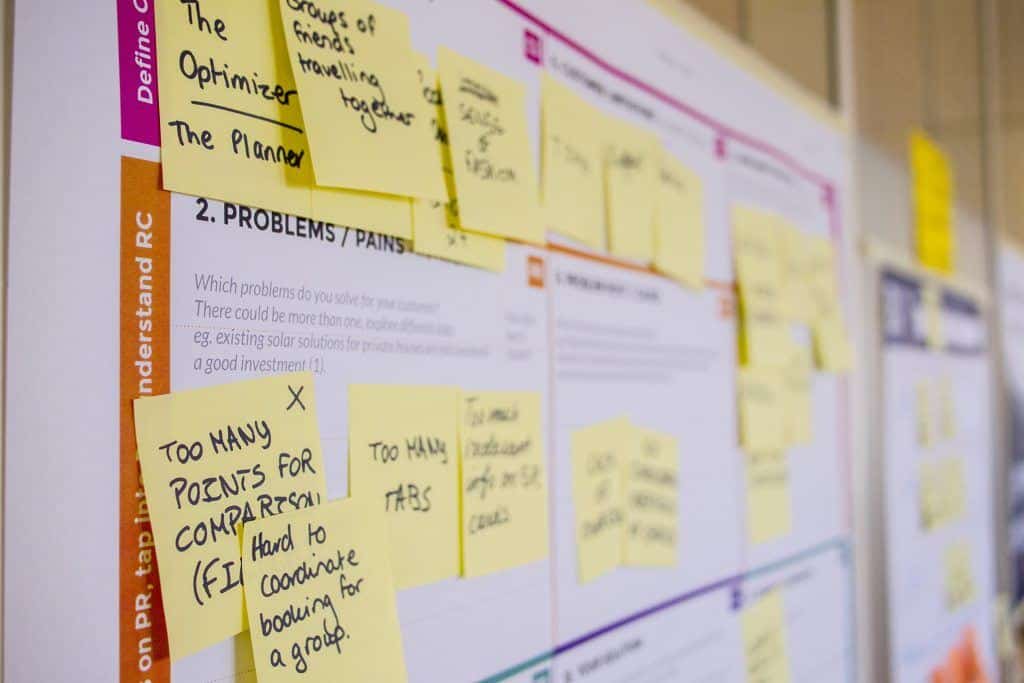
A prototype usually goes through three stages. First, you create a low-fidelity version: a sketch or wireframe in which you define the structure and information hierarchy. Think grey blocks and simple text, without colour or branding. This is followed by a mid-fidelity prototype with interactive elements: buttons that work, forms that provide feedback, menus that expand. In the final phase, you build a high-fidelity prototype that visually and functionally resembles the final product, including brand identity, animations and real content. Tools like Figma, Adobe XD or Webflow allow you to quickly switch between these phases. In practice, we see with SME clients that a mid-fidelity prototype often provides enough insight to continue or adjust.

Why prototyping is now standard

Prototyping werd populair in de jaren 2000, toen agile werkmethoden de watervalmethode vervingen. In plaats van maanden bouwen aan iets wat misschien niet werkt, test je nu binnen weken of je aannames kloppen. De opkomst van design tools zoals Sketch (2010) en Figma (2016) maakte prototyping toegankelijk voor niet-developers. Vandaag is prototyping standaard in elk traject waarin je een website laat maken, omdat het risico op miscommunicatie tussen opdrachtgever, designer en developer drastisch daalt. Je ziet wat je krijgt voordat de eerste regel code geschreven is.

What prototyping brings to your company

A prototype helps you do three concrete things. First, you find out whether your idea is technically feasible within budget and schedule. Secondly, you test whether users understand how your product works, without the need for a manual. Third, you avoid having to restart halfway through the build because a feature needs to be changed after all. In a recent project for a B2B wholesaler, the prototype showed that customers found the quote module too complicated. We simplified the flow before the front-end developer started, which saved three weeks of rebuilding. A good prototype saves time, money and aggravation, and gives you assurance that your investment matches what your market expects. More information on interactive prototypes can be found at W3C Web Accessibility Guidelines.

Applications of a prototype

Prototypes occur in almost every phase of a digital project, but the way you deploy them varies greatly from situation to situation. Below are four concrete applications that we regularly encounter in SMEs, plus an overview of when prototyping is and is not the right choice.

Validation of a new product or service

Je hebt een idee voor een nieuwe webshop, een klantenportaal of een configurator, maar je weet niet zeker of klanten het snappen of willen gebruiken. Een prototype helpt je dat te testen zonder meteen duizenden euro's in ontwikkeling te steken. Je bouwt een klikbare versie met de belangrijkste schermen en user flows, laat die testen door een handvol bestaande klanten of prospects, en verzamelt feedback. Een meubelzaak uit Gelderland wilde een 3D-configurator voor maatwerk keukens. We bouwden een Figma-prototype met zes stappen, testten het met tien klanten, en ontdekten dat stap vier te technisch was. Die hebben we vereenvoudigd voordat de webshop-ontwikkeling startte. Resultaat: een werkend product vanaf dag één, zonder dure aanpassingen achteraf.

Alignment between stakeholders and developers

Miscommunication is the biggest cost in any digital project. A director envisions something differently from the marketer, and the developer interprets the briefing differently again. A prototype makes abstract concrete. Everyone clicks through the same screens, sees how a form reacts, and can point out what works or doesn't work. This avoids endless mail exchanges about what "user-friendly" or "modern" means. On a project for an HR software company, we had four stakeholders with different requirements. The mid-fidelity prototype forced them to make choices: this feature now, that feature later. This resulted in a clear scope and a schedule that was right. A prototype is a shared language between business and technology.

User testing and accessibility checks

You can only know if a design works when real people use it. A prototype makes that possible without the need for a live website already. You test whether an order procedure runs logically, whether a search function is findable, whether a form is understandable for someone without specialist knowledge. This is also the time to check accessibility: does keyboard navigation work, are contrasts high enough, are error messages clear? Tools like Axe or WAVE scan your prototype for WCAG criteria. At a care institution, we tested a patient portal with elderly and visually impaired people. This yielded eight concrete areas for improvement, from larger buttons to clearer labels. Those adjustments took a few hours in the prototype, in code they would have taken days.

Pitch and funding for larger investments

If you need internal budget for a digital project, or want to convince external investors, a prototype helps make your story tangible. A PowerPoint with sketches is abstract, a clickable prototype shows how it works. This also applies to quotes: an agency that includes a prototype in the pitch phase shows that they understand your problem and have already partially worked out a solution. For a logistics company, we built a prototype of a track-and-trace dashboard. That prototype convinced management to approve the full track and trace because they could see how real-time data would improve customer service. A prototype is a selling point.

When a prototype is the right choice and when it is not

A prototype pays off if you are building something new, if you are unsure about the user experience, or if you need to aligne multiple stakeholders. It does not pay off if you are implementing a standard template without bespoke features, or if your project is so small that prototyping time takes longer than the build itself. An example: a simple landing page with one form does not need a prototype, a ten-step configurator does. Prototyping is also less useful if you don't have time to process feedback. Creating a prototype and then ignoring it is a waste of money. Use it only if you are willing to adjust based on what you learn.

Want to apply this in your company? Monkey Vision helps SME entrepreneurs with web design, SEO and smart digital solutions. Plan a no-obligation discovery call and discover what is possible for you.

Plan a discovery call

Frequently asked questions

No, a wireframe is a static sketch showing structure and layout, without interaction or visual design. A prototype goes further: it is clickable, responsive to actions and simulates how the final product works. You use a wireframe to quickly sketch out ideas and agree on information hierarchy. You use a prototype to test whether users can complete a task, such as placing an order or creating an account. In practice, a project often starts with wireframes, which then evolve into an interactive prototype. Both have their place, but a prototype gives much more insight into the user experience.

It depends on what you want to test. A low-fidelity prototype is quick and cheap, ideal for validating structure and navigation early in the process. Think grey blocks and simple text in Figma or on paper. A high-fidelity prototype looks like the final product, with branding, animations and real content. You use that to test whether a design convinces, whether an interaction feels pleasant, whether a form is clear. For a first round of validation with stakeholders, low-fidelity suffices. For user testing or a pitch to investors, you choose high-fidelity. In web design projects, we usually start mid-fidelity: enough detail to understand, not so polished that adjustments hurt.

The biggest mistake is working on a prototype for too long without testing it. You build something beautiful, only to discover after weeks that users cannot find a crucial button. Test early and often, preferably with real users rather than colleagues. A second mistake is adding too much detail early on. If you are still unsure about the information architecture, there is no point in working out colours and animations. A third mistake is forgetting to include edge cases: what happens if a form gives an error message, or if a page is empty? You need to prototype those scenarios too. Finally, a prototype is not an end in itself. It serves to learn and make decisions, not to impress.

It depends on where you are now and what you want to achieve. Do you have an idea for a new digital product but doubt customers will get it? Or do you want to revamp an existing website and first test whether the new set-up works? In both cases, a prototype helps to reduce risks and use budget more efficiently. At Monkey Vision we often start with a free 45-minute design scan, in which we analyse your current situation and determine whether a prototype adds value. You get instant insight into which parts to test, what fidelity level fits, and what the turnaround time is. No sales pitch, just a clear plan that fits your schedule and budget.

About the author

Monkey Vision

Monkey Vision is a full-service digital agency based in London, specialising in web design agency, SEO and AI automation for SMEs. The knowledge base is compiled by our team of online strategists and continuously updated based on current insights.

Publication date: 26-04-2026
Last update: 26-04-2026