Een AI Agent is een softwaresysteem dat zelfstandig taken uitvoert en beslissingen neemt om vooraf bepaalde doelen te halen, zonder dat iemand bij elke stap hoeft in te grijpen. Het analyseert situaties, kiest een aanpak en voert acties uit op basis van actuele informatie. Anders dan traditionele automatisering met vaste scripts past het gedrag zich aan.
How does an AI Agent work in practice
An AI Agent combines multiple technologies: natural language processing to understand communication, machine learning to recognise patterns and decision rules to determine actions. The system works through a cycle of perceiving, reasoning and acting. First, the agent gathers data from its environment, e.g. customer queries from emails or stock levels from a system. Then he analyses this information and determines which action best suits the purpose. Then he executes that action and monitors the result. For a customer service agent, this means: reading a question, recognising the intent, formulating the right answer and possibly planning a follow-up action such as creating a ticket. Through feedback from these interactions, the agent improves its performance over time.
From chatbot to autonomous system
The term AI Agent emerged when software systems evolved beyond simple if-then rules. Early chatbots could only provide pre-programmed answers. Modern AI Agents, on the other hand, can handle complex tasks that require planning multiple steps and consulting different systems. An agentic workflow means that the system itself determines the sequence of actions needed to achieve a goal. This development was made possible by improvements in large language models and reinforcement learning. For SMEs, this becomes relevant as tasks that previously required human intelligence can now be reliably automated, from preparing quotes to reordering stock.
What AI Agents bring to business processes
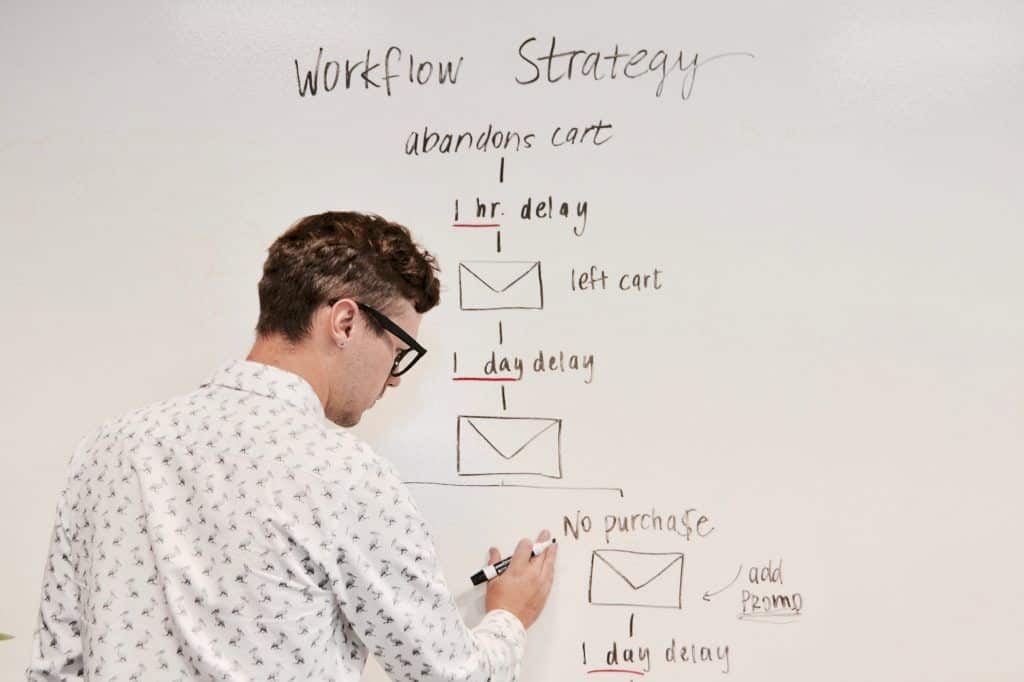
In practice, we see with SME clients that AI Agents add value mainly in repetitive but nuanced tasks. For example, an agent can screen incoming requests and immediately assign them to the right department, complete with relevant context. Or it monitors website behaviour and sends personalised follow-ups without a marketer having to set each trigger manually. Combining AI automation with existing systems creates a layer that works 24/7 and scales without additional staff. The difference with standard automation lies in its flexibility: where a traditional script gets stuck in the event of an unexpected situation, an AI Agent can improvise within its knowledge domain. For example, for an online shop with 500 products, this means that an agent can answer customer questions about combinations and alternatives that are not literally in an FAQ, based on product attributes and previous conversations.