Priorities

Prioritisation, Priority list, Priorities, Setting priorities, Work prioritisation
Priorities are based on a conscious choice of which tasks, projects or objectives take precedence, based on impact and urgency. They help you maintain focus and deploy scarce resources effectively.

What are the priorities?

Priorities involve the deliberate ranking of tasks, projects or objectives based on their relative importance and urgency. In practice, this means choosing what will deliver the greatest benefit for your company right now and what can wait. For SME entrepreneurs, this is crucial because time, budget and manpower are always in short supply. Without clear priorities, you end up working reactively rather than strategically.

How prioritisation works in practice

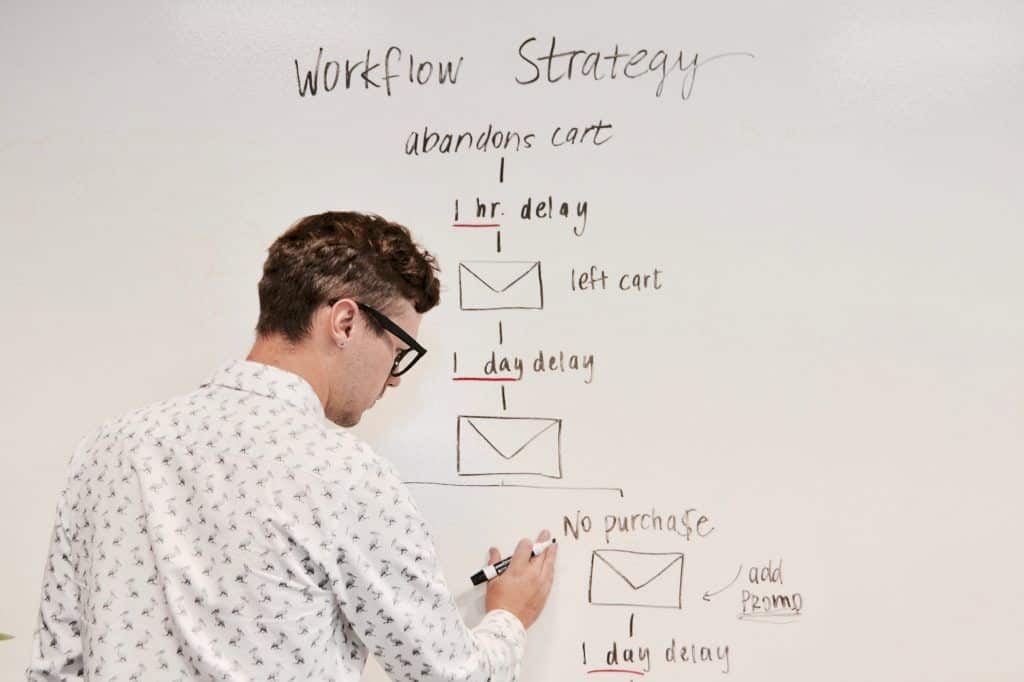
Prioritisation begins with taking stock of all possible tasks and projects. You then weigh up each item along two axes: impact (how much does it deliver) and urgency (how quickly does it need to be done). The combination determines the order of priority. A commonly used model is the Eisenhower matrix, which distinguishes between important and urgent. You tackle what is both important and urgent straight away. What is important but not urgent, you schedule in. You delegate or automate tasks that are urgent but not important. You deliberately set aside or scrap tasks that are neither important nor urgent. In practice, we often see with SME clients that urgent but unimportant matters demand all their attention, whilst strategic projects are left on the back burner.

Why prioritisation is now more important than ever

The number of choices and possibilities has grown exponentially over the past ten years. You can advertise on ten platforms, optimise your website for a hundred keywords, and automate your processes with dozens of tools. Without prioritising, you spread your efforts too thinly and won’t see any real results anywhere. Furthermore, markets are changing faster. What was a priority last quarter may now be outdated. Companies that regularly reassess their priorities remain agile. Companies that try to do everything at once become paralysed. Prioritisation is not a one-off exercise, but an ongoing process that aligns with your strategic goals.

This delivers clear priorities for your company

With clear priorities, you make decisions faster, increase your team’s focus and see measurable progress towards the goals that matter. Instead of having ten projects half-finished, you deliver three projects in full. That creates momentum and builds confidence. You also avoid waste: budget that would have gone to a low-priority campaign is now invested in a project with a higher ROI. At Monkey Vision , we’ve noticed that clients who have clear priorities move forward more quickly with a rebranding project or a website relaunch. They know what they want to achieve and what steps are needed to get there. This makes collaboration more efficient and results more predictable.


Applications of priorities

Priorities play a role in virtually every aspect of your business operations. Whether you’re allocating your marketing budget, reviewing your product portfolio or planning your team’s capacity: in every instance, you’re making choices about what takes precedence. Below are four specific scenarios where prioritisation has a direct impact on your results.

Project portfolio and roadmapping

If you’re running several projects at once, you decide which ones to tackle first and what resources to allocate to them by setting priorities. For example, an online shop with 500 products could choose between expanding its product range, improving the checkout flow or optimising product pages for SEO. By comparing the expected impact and effort for each project, you can choose the order that generates the most revenue. In practice, we find that companies often start too many projects at once, which slows down each one. A clear roadmap with a maximum of three parallel initiatives prevents this. You only schedule new projects once another has been completed or has reached a milestone.

Marketing budget and channel selection

Your marketing budget is finite. Prioritisation helps you choose between SEO, SEA, social media, email marketing or content creation. For example, a B2B service provider with a long sales cycle is better off investing in thought leadership and LinkedIn than in TikTok adverts. A local retailer with a physical shop prioritises local SEO and Google Shopping over brand awareness campaigns on YouTube. By weighing up your target audience, conversion path and available capacity, you can choose the channels with the highest ROI. Our experience shows that companies which spread their budget across too many channels see fewer results than those which focus on two channels and execute them really well.

Product portfolio and product range choices

Which products or services deserve the most attention? Prioritisation helps you choose between further developing existing bestsellers, phasing out loss-making items or launching new propositions. For example, an online shop can analyse which 20 per cent of its product range generates 80 per cent of turnover and prioritise those products in terms of stock, marketing and SEO. You should discontinue loss-making products with low demand or mark them as being phased out. Test new products on a small scale before allocating a budget to them. This approach prevents you from investing energy in products that yield little return and maximises the return on your purchasing and marketing investment.

When prioritisation is the right choice and when it isn’t

Prioritisation works best in situations of scarcity: too little time, budget or staff to do everything at once. It helps you stay focused and make measurable progress. Prioritisation works less well if your goals are unclear or if your context changes rapidly without your priorities being reviewed. In a crisis or when a sudden market opportunity arises, you sometimes have to deviate from your planned priorities. That is not a failure, but agile entrepreneurship. The trick is to regularly reassess your priorities (for example, quarterly) whilst leaving room for unplanned opportunities. Companies that set their priorities in stone miss out on opportunities. Companies that have different priorities every week never get anything done.

Want to apply this in your company? Monkey Vision helps SME entrepreneurs with web design, SEO and smart digital solutions. Plan a no-obligation discovery call and discover what is possible for you.

Plan a discovery call

Frequently asked questions

No, prioritising and planning are two different steps. Prioritising is choosing what is most important based on impact and urgency. Planning is setting out when and how you will carry out those priorities. You can have a perfect plan, but if you plan the wrong things, it will yield little benefit. Conversely, you can have clear priorities but no plan to carry them out. The best approach combines both: prioritise first, then plan. In practice, we often see teams starting to plan straight away without prioritising first, which means they end up doing the wrong things efficiently.

The best choice depends on your situation. You measure impact in terms of turnover, profit, customer retention or strategic value. You measure urgency in terms of deadlines, risks or dependencies. Ideally, you should choose projects that combine high impact and high urgency. But if you have to choose: go for impact. You can delegate or automate urgent but unimportant tasks. Important but non-urgent projects will yield the greatest returns in the long term. A common mistake is to treat everything as urgent. This causes you to lose your competitive edge and work reactively. Set aside at least 50 per cent of your capacity for projects that are not urgent but are important, such as SEO optimisation or brand building.

Start by taking stock of all ongoing and planned projects, campaigns and tasks. For each item, note down the expected impact (turnover, profit, customers) and the required effort (hours, budget, capacity). Use a simple matrix: high/low impact versus high/low effort. Tackle projects with high impact and low effort first. Plan projects with high impact and high effort carefully. Scrap or postpone projects with low impact and high effort. Discuss the results with your team and set the top three priorities for the coming quarter. Repeat this process every quarter and adjust where necessary. Want to know more about strategic planning? Check out our knowledge base.

The best first step depends on where you are right now. Do you feel like you’re doing a lot but achieving little? Or are you unsure which marketing channels or projects are actually delivering results? Then book a free 45-minute strategy session at Monkey Vision. We’ll go through your current projects and goals and help you clarify your top three priorities. You’ll immediately get an overview of what’s currently delivering the best results, which projects can wait, and where you should best allocate your resources. No sales pitch, just a concrete action plan. Take a look at our approach to strategic consultancy or get in touch to arrange an appointment.

About the author

Monkey Vision

Monkey Vision is a full-service digital agency based in London, specialising in web design agency, SEO and AI automation for SMEs. The knowledge base is compiled by our team of online strategists and continuously updated based on current insights.

Publication date: 26-04-2026
Last update: 26-04-2026