Marketing automation is software that automatically carries out recurring marketing tasks based on pre-set rules and customer behaviour. Examples include sending welcome emails after a purchase, assigning lead scores based on website visits, or segmenting your mailing list according to purchase history. Instead of sending every email manually or assessing each lead individually, you set up a workflow once, which then runs autonomously. For small companies, this means that even with a small team, you can still deliver personalised communication at scale.
How marketing automation works in practice
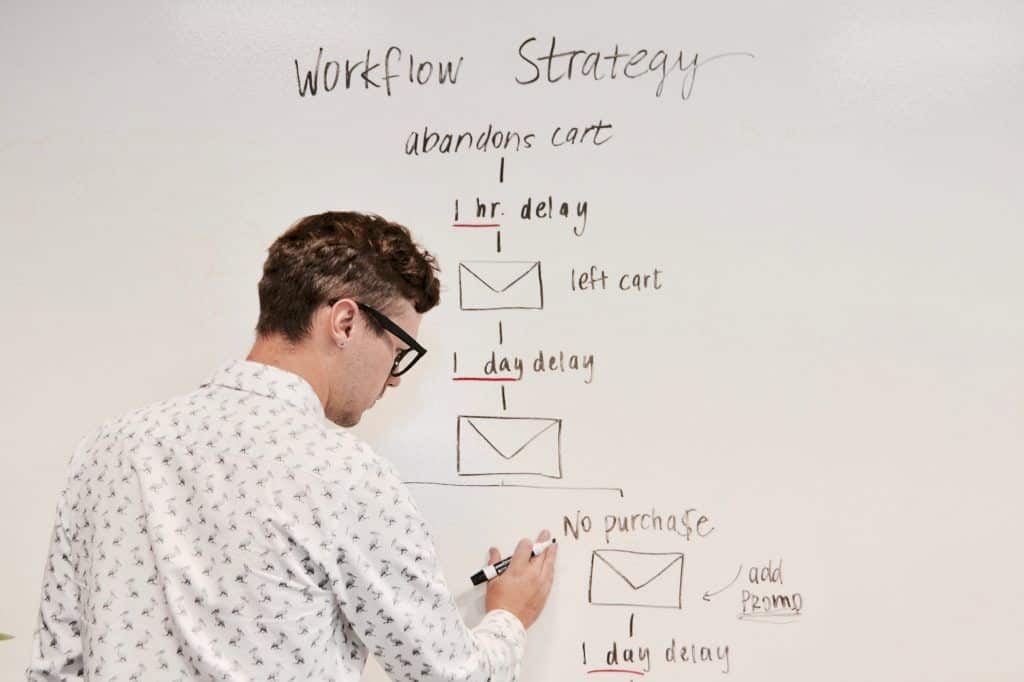
A marketing automation platform connects your website, CRM, email system and, if applicable, your online shop. You set up triggers: a visitor downloads a white paper, fills in a form, or abandons a shopping basket. The system records this behaviour and automatically launches a pre-built campaign. For example: three days after an abandoned shopping basket, a reminder email is sent, followed by a discount code a week later. Each contact is given a score based on their activity: if someone opens five emails and visits the pricing page three times, their lead score increases. This way, your sales team knows exactly who is a warm lead and who isn’t yet. The software tracks everything in a central dashboard, so you can see at a glance which campaigns are running and where the bottlenecks are.
Why marketing automation came about and why it is relevant today
Marketing automation emerged when companies realised that manually following up on hundreds of leads was not scalable. B2B service providers and online shops with longer purchasing journeys, in particular, realised that potential customers were falling between the cracks: there was too little time to approach everyone personally, and too little insight into who was genuinely interested. The first platforms focused on email marketing, but evolved into complete ecosystems that also manage advertising, social media and content personalisation. Today, marketing automation is relevant because customers expect you to remember their behaviour. A visitor who views your product page three times does not want to receive the same generic newsletter as someone visiting for the first time. Personalisation at scale is no longer a luxury, but the norm in competitive markets.
What marketing automation delivers for small and medium-sized companies
With marketing automation, you can increase the conversion rate from lead to customer without putting in extra hours. You send the right message at the right time, without anyone having to manually send each email. An online shop with 2,000 visitors a month can automatically send reminder emails to the 15 per cent who abandoned their shopping basket, which generates immediate revenue. A B2B service provider can automatically send leads who download a white paper a case study a week later, followed by an invitation to a meeting. Your marketing team can see in real time which campaigns are working and which aren’t, as every touchpoint is measurable. Do you want to link this to a broader strategy? A well-thought-out SEO approach ensures that the right visitors come to your site, after which marketing automation converts them into customers. This allows you to work more efficiently and get a better return on every marketing euro.