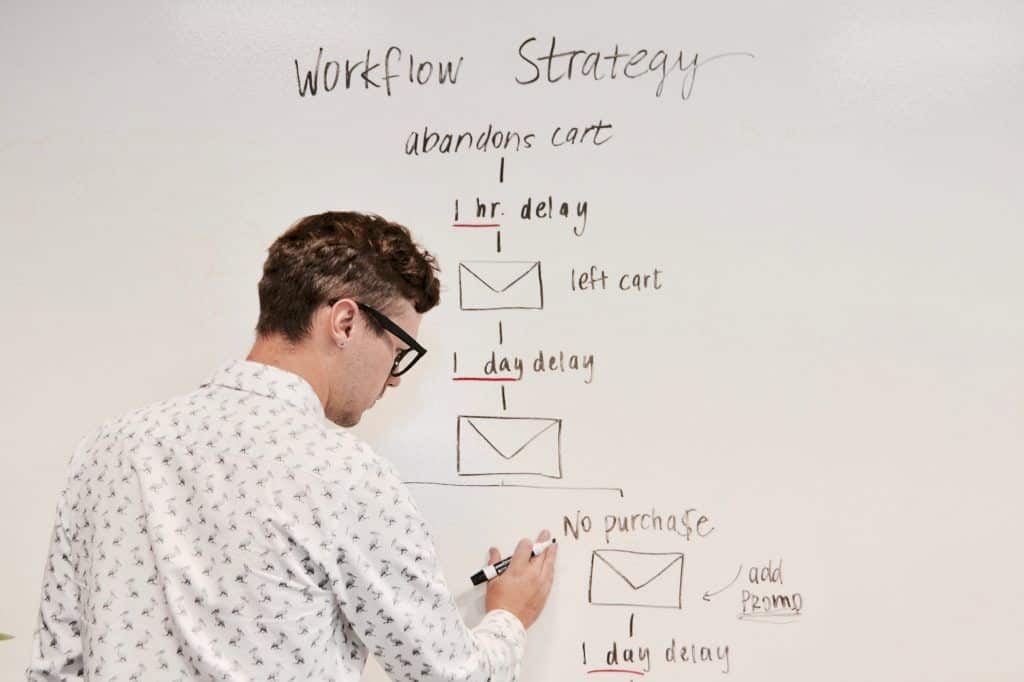
Retentie meet hoeveel bezoekers of klanten binnen een bepaalde periode terugkomen naar je website, webshop of dienst. Je drukt het uit als percentage van je oorspronkelijke groep dat actief blijft. Hoge retentie wijst op tevredenheid, relevantie en binding.
How retention is measured and calculated
The basic formula is simple: divide the number of returning users by the total number of users at the beginning of the period, multiply by 100. In Google Analytics, this is shown as returning users versus new users. For online shops, it is mainly the number of customers making a second purchase that counts. For SaaS companies, you look at active users per month or quarter. The period you choose depends on your cycle: a coffee bar measures weekly, a mortgage consultant annually. The important thing is that you measure consistently and track the same cohort. Increasing retention from 30% to 45% in three months means that your product or service is better suited to the needs of your target audience.
Why retention has become more important
Acquisition costs through ads have risen significantly in recent years. According to Google Ads, the average cost per click in the United Kingdom is between 1 and 5 pounds, depending on the sector. Convincing an existing customer often costs a fraction of that. In addition, competition for attention has increased enormously. A new visitor converts between 1% and 3% on average, while a returning customer converts up to 60%. Retention ensures predictable sales, lower customer acquisition costs and a more stable cash flow. In practice, we see that SMEs with retention above 50% grow faster and are less dependent on external advertising budgets.
What retention brings to your company
Higher retention means you need less budget to achieve the same level of sales. You can focus your SEO strategy and content marketing on deepening rather than just new inflows. Existing customers are also more likely to give feedback, improving your product or service. They refer more often, which ensures organic growth. For an online shop with 10,000 visitors per month and an average order value of 50 pounds, an increase from 5% to 10% retention makes a difference of 25,000 pounds of extra turnover per year. For service providers such as consultants or agencies, retention ensures long-term partnerships and less time spent on acquisition. Retention is a direct measure of customer satisfaction and product-market fit.