Animations

Animation, Moving images, Motion graphics, Web animations, CSS animations, Micro animations, Micro interactions
Animations are moving visual elements on websites that attract attention, clarify interactions or tell a story. They improve user experience and conversion if they are functional.

What are animations?

Animations are moving visual elements on websites, apps or digital interfaces that show a change in state, position or shape. They can be subtle, such as a button that changes colour on hover, or more complex, such as an animated illustration explaining a work process. Unlike static images or text, animations add a temporal dimension to your interface. For small and medium-sized companies, animations are particularly valuable when they serve a specific purpose: they draw attention to key elements, provide feedback on actions, clarify complex information or reinforce your brand identity.

How do animations work in web design?

Animations on websites are created by gradually changing properties such as position, size, colour, transparency or shape. Technically, this is achieved using CSS (for simple transitions and keyframe animations), JavaScript (for more complex interactions) or SVG animations (for scalable vector illustrations). A typical example is a professionally designed website where a menu slides in smoothly when you click on the hamburger menu. That movement consists of multiple frames that are played back within a fraction of a second. The browser calculates the intermediate steps, making the transition appear smooth. Modern browsers support hardware acceleration, so that animations run on the GPU rather than taxing the CPU. This makes it possible to achieve a smooth 60 frames per second, even on mobile devices.

Why animations are becoming increasingly important

Animations are not new, but their role has changed. In the past, they were mainly decorative or used to attract attention (think of flashing banners). Nowadays, they are an essential part of user interface design. Since the rise of mobile apps, users have come to expect an interface to respond to their actions. A button that does not visually respond to a click feels broken. Animations provide feedback, confirm actions and make complex transitions understandable. According to the W3C’s Web Content Accessibility Guidelines, animations must also be accessible: users with vestibular disorders may be affected by excessive movement, so it is important to be able to disable animations.

What animations offer small and medium-sized companies

For an SME company with a website or online shop, animations can make the difference between a static, forgettable experience and an interface that guides users. An online shop that uses subtle animations to show products being added to the shopping basket provides immediate confirmation and boosts trust. A B2B service provider that uses an animated infographic to explain a complex process increases the likelihood that a visitor will understand the value and get in touch. In our web design projects for small and medium-sized companies, we’ve found that the thoughtful use of animations can increase time on page by 20 to 40 per cent and reduce the bounce rate. However, animations must be functional: too much movement is counterproductive and slows down loading times.
Applications of animations

Animations are highly versatile, but their value depends on the objective. In practice, we see three main applications among SME clients: improving user interaction, enhancing brand perception and clarifying complex information. Below, we describe the most common scenarios in which animations make a measurable difference.

User feedback and interaction confirmation

The most basic use of animations is to provide feedback on actions. When a visitor clicks a button, submits a form or adds a product to their shopping basket, an animation confirms that the action has been registered. A button that briefly changes colour, a tick that appears or a subtle shake animation in the event of an error message: these are micro-animations that instil confidence. An online shop with 200 products that provides no visual feedback when a product is ‘added to the basket’ loses conversions because users are unsure whether the action was successful. For a B2B service provider with a quotation form, an animated progress bar can reassure the user that the form is being processed. These animations are technically simple to implement using CSS transitions and have a direct impact on user satisfaction.

Strengthening storytelling and brand identity

Animations can bring your brand identity to life. An illustration that unfolds as the user scrolls, a logo that moves subtly on hover, or an animated mascot that greets visitors: these are examples of animations that add emotion and personality. For an SME company with a strong visual identity, such as a creative agency or a sustainable brand, animations can make the difference between a generic website and a memorable experience. As part of a brand identity project, we sometimes develop a set of brand animations: a consistent animation style that is reflected in the header, icons and call-to-action buttons. This enhances brand recognition and positions you as professional and contemporary. Please note: these animations must align with your brand personality. An accountancy firm benefits from subtle, confidence-inspiring movements, whilst a nursery can afford to be more playful.

Visualising complex information

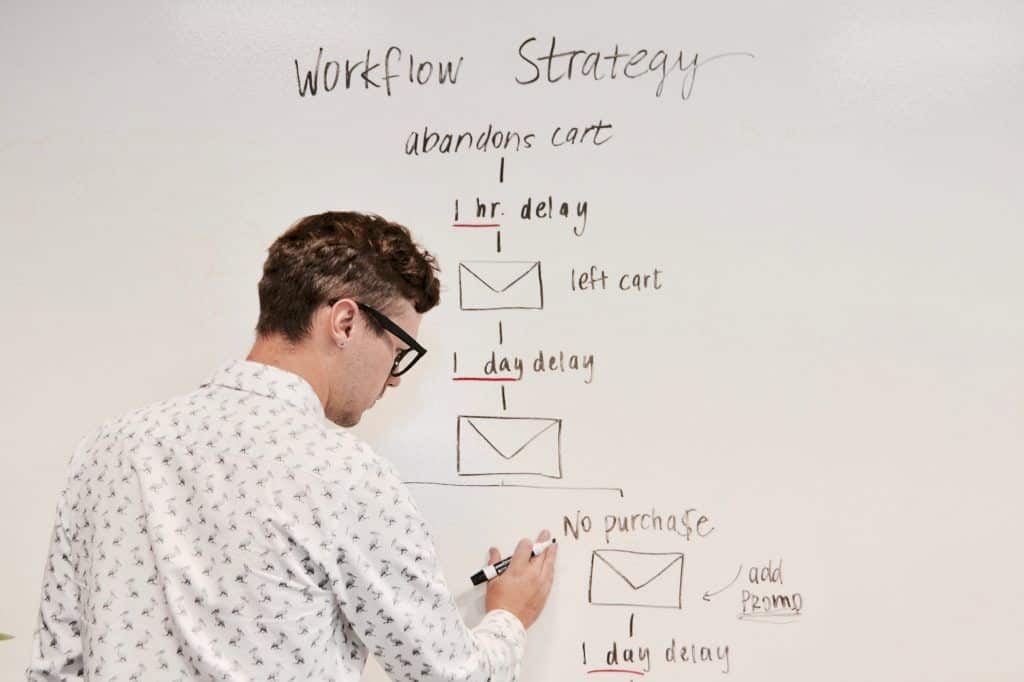
Some products or services are difficult to explain in text alone. Animations can clarify a process, a step-by-step guide or a technical mechanism. A SaaS platform that shows an animated demo of how the software works converts better than a static screenshot with an explanation. An installation company that uses an animated infographic to show the installation process reduces queries and boosts confidence. At Monkey Vision , we use this approach for clients with complex services: an animated timeline showing the stages of a process, or an interactive animation where users can click to learn more. These animations require more development time than micro-animations, but deliver measurable improvements in understanding and conversion rates. They are particularly effective on landing pages and product pages where visitors make a purchasing decision.

When animations are the right choice and when they are not

Animations are valuable if they serve a clear purpose: providing feedback, clarifying information or enhancing brand experience. They are not suitable as mere decoration or if they negatively impact loading times or performance. An online shop with heavy animations that push the load time up to 5 seconds loses more conversions than the animations generate. A business-to-business (B2B) site with too many playful animations can come across as unprofessional. In SEO projects, we always test the impact of animations on Core Web Vitals: if they negatively affect Largest Contentful Paint or Cumulative Layout Shift, we scale them back or optimise the code. Animations are also unsuitable for users with vestibular disorders: always provide an option to disable animations via the `prefers-reduced-motion` media query.

Want to apply this in your company? Monkey Vision helps SME entrepreneurs with web design, SEO and smart digital solutions. Plan a no-obligation discovery call and discover what is possible for you.

Plan a discovery call

Frequently asked questions

Not necessarily, but it depends on how they are built. Simple CSS animations like a colour transition or a fade-in have little impact on load time. Complex JavaScript animations or large video-like animations, however, can negatively affect performance, especially on mobile. In practice, we see with SME clients that well-optimised animations increase load time by less than 0.2 seconds, while poorly built animations can double the time to first interaction. Always test with tools like Google PageSpeed Insights and look at the impact on Core Web Vitals. If animations lift the Largest Contentful Paint above 2.5 seconds, optimisation is needed.

CSS animations are the best choice for simple, repeatable movements such as hover effects, fade-ins or rotations. They run on the GPU and are therefore faster and more efficient. JavaScript animations are required for more complex, interactive scenarios where timing, sequence or user input plays a role, such as an animated infographic that responds to scrolling. For a standard SME website with subtle micro-animations, CSS is sufficient in 90 per cent of cases. JavaScript is often required for a product demo, interactive storytelling or an online shop with dynamic filters. In our web development projects, we choose the lightest technique that delivers the desired result, so that performance remains guaranteed.

The most important rule is: animations must serve a purpose; they should not be an end in themselves. Avoid continuous movement without reason, such as a logo that spins endlessly or flashing elements. Limit the duration: the most effective animations last between 200 and 500 milliseconds. Any longer feels sluggish; any shorter feels abrupt. Use easing (acceleration and deceleration) to make movements feel natural. A common mistake is using too many different animations on a single page: this creates visual chaos. Choose one or two animation styles that suit your brand and use them consistently. Test with users: if visitors don’t know where to look or feel overwhelmed, scale back. In conversion optimisation, we always test animations for their effect on click behaviour and time on page.

The best approach depends on your current situation and goals. Do you already have a website but aren’t sure where animations could add value? Then book a free web design scan with Monkey Vision – a 30-minute session where we’ll walk through your site live. You’ll immediately receive three specific areas where animations can improve the user experience or conversion rate, plus an honest assessment of the technical feasibility and impact. We’ll look at your target audience, brand identity and current performance, so you know which animations suit your company. No sales pitch – just practical advice you can put into action this week.

About the author

Monkey Vision

Monkey Vision is a full-service digital agency based in London, specialising in web design agency, SEO and AI automation for SMEs. The knowledge base is compiled by our team of online strategists and continuously updated based on current insights.

Publication date: 26-04-2026
Last update: 26-04-2026